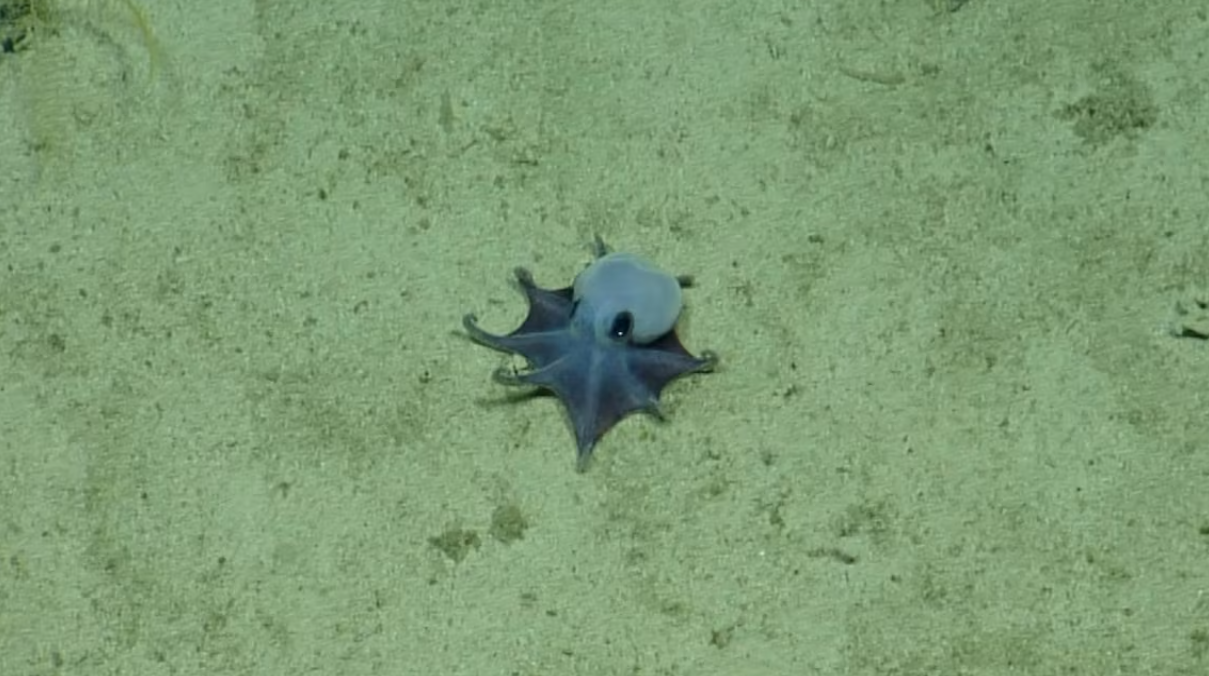
On May 25, 2026 a new species of octopus was found at the bottom of the Galapagos Islands. A team named the Charles Darwin Foundation is the organization that found this tiny creature. They discovered that the octopus was tiny enough to fit in the palm of your hand.
A scientist and researcher from the organization, Janet Voight says, “Right away, I knew it was something really special.” They did research and the name of this tiny octopus is “Microeledone Galapagensis.” It’s called this because of its rare blue color.
Parker Sunn, a student from New Berlin West, shares his opinion on the new octopus saying, “I think it’s very fascinating since there’s not much of the ocean explored, so I’m glad they’re making new discoveries.” Oceans have only been less than 0.001% discovered, so finding new animals and discovering them is super important to our earth. This specific species is interesting because its family is significantly larger than the octopus in the photograph. The Galapagos Island oceans are continually getting researched because it’s the only home for 1,000 plants and animals hold some of the most unique species that live there.
The Galapagos Islands have experienced issues, such as overfishing, pollution, and oil spills. Overfishing has been affecting the biodiversity of certain animals and destroying coral reefs on the islands. Pollution has been affecting residents and wildlife. Plastic is used everyday by people on the Islands as it is a part of their routine. Also, noise and light pollution have been affecting wildlife. For example, noise and light pollution affect how birds and turtles migrate. Another issue like oil spills take a toll on the Galapagos Islands. But, new technology is being built to better secure oil spills and prevent them from happening. Because of this, Galapagos Marine Reserve is taking action to stop these issues from happening. The Reserve has been training park wardens on how to keep the ocean in better condition. Also, the reserve has been able to protect endangered species like sharks and rays during this process.
After discovering this new species, locals may have a better feeling about what their impact has done for their community and for years to come.